Wednesday, 27 April 2011

Analysis of a Title Sequence - DodgeBall

For research into title sequences I chose DodgeBall: A True Underdog Story

Immediatly the audience is watching a parody TV advertisement for Globo Gym which features shots of weightlifters and exercisers. These shots mainly consist of the female body in tight clothing, giving the audience an idea of the commercial.

The narrator has a cheesy american voice talking to the viewer and asking them questions, much like stereotypical advertisement people would expect. He goes onto to say "tired of out of shape and out of luck with the opposite sex" and it shows a shot of a male lifting up a female whilst he does push ups.


The narration then switches to White Goodman (Ben Stiller) and he begins to speak about the gym whilst walking the camera through it. We see various people working out and Stiller also speaks some ridiculous lines like "ugliness and fatness are genetic disorders, much like baldness or necrophilia". It jumps straight into the comedy and the audience is given a huge idea about what kind of character Stiller will play.

Goodman then shows the viewer a picture of what he used to be like, which is a crazy picture of him, obese and naked, eating ice cream.

We then see Peter LaFleur (Vince Vaughn) and the editing drops in pace, the music stops and feed good music kicks in, showing the differences in the characters.

The titles also come on now, the font is simple and orange which has a old-style look. The colour itself matches the main character and how he's only ordinary.
Peter carries out his daily routine of getting up, brushing his teeth and getting into his car to go to work.

Thank You Uncle Norman


The finished film.

Evaluation - Thank You Uncle Norman

1. In what way does your media product use, develop or challenge forms and conventions of media products?

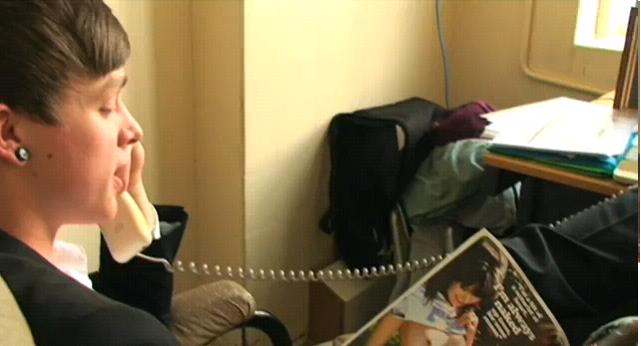
Our film uses typical conventions of comedy, such as a lazy main character who likes to drink and a solicitor who looks at adult magazines whilst talking on the phone to a client. Although they may not be in all comedy films, we often see such characters with similar traits in more modern comedy films such as Pineapple Express with the main character as a person addicted to marujuana and does his job in roundabout ways.

We develop these conventions in our film with the storyline and the events that happen in the film. For example, to emphasize Jim's lazyness we had shots of him lying on his sofa watching TV and playing games.

The music we used follows the general comedy conventions of being up beat and we chose rock/indie as it links with our main character and the poster at the beginning.

The opening sequence of our film is similar to a few films that I've researched, most notably Step Brothers and Dodgeball. In our film we start off with the titles, showing the film and the main cast and then it goes straight into the film with the music over the top. This is similar to Step Brothers as the music and how the start of the film consists of the brothers just doing their own things is the same as Jim who gets up, watches TV and plays some games.

Jim gets up and goes down stairs into the bathroom whilst his brother exits his room ready to go to college.

Jim shuts the door behind him and it cuts to flowing water, with the camera zooming out to show thats it's only water pouring into a cup which is light hearted humour as the audience may be thinking that we were showing him urinating. He then goes into the living room and sits on the sofa which we have a similar angle found in Dodgeball.

Jim receives a phonecall from a solicitor telling him his Uncle has passed away and left his brother inheritance, not him which gives him a shock but procedes impersonate his brother and claim the money as his.

2. How does your media product represent particular social groups?
Our film reprents social groups such as the low class teenage male who has finished college and is jobless. We also added in how he likes to drink and party which can be seen by the drinks we placed in his room. This represents other teenagers in similar situations as him and also attracts them to watch to film as they're familiar with the situation the main character lives in. Although this is stereotypical, it's also realistic as there are people out there who have gone through a similar situation in life.

3. What kind of media institution might distribute your media product and why?
A major Hollywood studio wouldn't be distributing our film as it has a british feel about and low profile actors. However, it could be sucessful even with these setbacks as comedy films don't focus as much on the special effects used or the high budget sequences, more on the dialogue and script.

A small distributor such as Warp Films (they would have a part in production) or Optimum Releasing (This Is England and Four Lions) would distribute our film in Britain. The film would start in cinemas and go onto DVDs after time on screen, following the standard route films take. It could also be bought or rented using the internet with sites such as Amazon, Play.co.uk and Love Film.

There would be possibilities for merchandising in the film as there are props that we use which advertise products such as the gaming console shown during the title sequence and the phone. Clothes which Jim wears could be of a certain brand and attract viewers to buy clothes from the brand, as the main character wears it.

4.Who would be the audience for your media product?
The general audience of our target audience would be 15-25 males, as that age group can relate to the main character. However, older viewers may find out film interesting if they like the plot or just enjoy comedy.

The main cast are males only and if the film were to carry on for full length we would only have girls be sex symbols and play a small part, which would detract our female viewers to an extent but some would still watch the film as other comedy films such as American Pie have this approach and have some female viewers.

Similar films to ours include Step Brothers, Superbad and Pineapple Express which have the typical bro-comedy, two or a group of close friends who experience silly situations together. As shown in our audience feedback, these films are amongst peoples favourites and they would watch our film takes ideas from them.

The film would be classified as a 15 as we created the film to follow these guidelines. The language would be too strong for 12, but staying within the limits of 15. It also has brief nudity but is not strong, which would keep it at the 15 classification.

http://www.bbfc.co.uk/classification/guidelines/15-2

5. How did you attract/address your audience?
We attract our intended audience of 15-25 year old males using the cast, which is of a similar age group consisting of 19 year old Jim and 17 year old Craig. Jim and Craig would go through things in their life which the audience can relate to such as partying, college or being jobless.
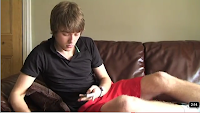
The audience would also witness most of the film from Jim's viewpoint and the camera shots would generally be of his height. This will put the viewer in Jim's shoes, which would make them enjoy the film more and the comedy would seem more natural to them.

6. What have you learnt about technology from the process of constructing the product?
We used Sony HDV1000's to film and we learnt that the cameras aren't complicated to use, which helped us as things such as white balance, checking if it was on widescreen or watching our shots on set helped us save time and gave our film a look of high quality. The tripod can take awhile to set up to make sure it's level and isn't too loose or tight and it can also restrict us as some pans and tilts were harder to pull off with the tripod due to it getting stuck sometimes.

There were some problems we faced such as the lighting. As we didn't have time to film it all in one day the weather would sometimes take a change for the worse, which would mean we have less natural lighting and wouldn't give our film a summery feel.


We used Final Cut Express when editing our footage. During the few sessions we spent editing, we developed skills to be able to do all the editing ourselves apart from when we needed certain effects to be added into our film. One effect we used was Dip to Colour Dissolve which helped our opening title sequence blend into the film smoothly. Another effect we used was a High Pass filter which we placed into the audio to give the effect of a phone call. We also did small things like increasing the audio levels on some shots to keep the levels consistent, increasing the speed off the titles to match the music and editing our shots to cut to the beat of the music.

7. Looking back to your preliminary task, what do you feel that you have learnt in the progression from it to the full product?
We spent time planning what we would do in our film and what the plot would be. The planning and storyboarding ensured we were focused on what we had to do and we also thought up better ideas than we had originally thought as the production went on. The shooting script also helped us not waste time trying to figure out what to shoot first and what goes where in editing.

The research we did gave our film a more professional feel, as our film has conventions from other modern comedy films which we found by watching and analysing other films. The research we did also gave us an idea of our audience and what they want, which enticed us to make our film have similarities to films such as Step Brothers.

Our use of the different shot types has definately improved such as match on action and different angles and height as seen in our film. I feel that I'm comfortable using the editing software and cameras without much help apart from the more advanced effects in editing which I may need to figure out.

Our lighting was also much better in our film than in the preliminary task, we saw that problem after we filmed our preliminary task and we made sure we did it properly in our film.
Finally, I feel that our film was sucessful in fufilling a 2minute opening of a comedy films and it incorporates everything I feel that would make it obvious to the viewer that the film is of a comedy nature.

Tuesday, 26 April 2011

Thank you Uncle Norman Evaluation

Media Evaluation

1. In what way does your media product use, develop or challenge forms and conventions of media products?
In our film we tried to incorporate generic conventions of a comedy film such as pineapple express and step brothers so called ‘bro-mances’, in our film the main character is a typical lazy slob who party’s all the time, the first shot he is seen waking up with beer bottles around him, in most comedy film there is atleast one shot of a guy waking up after a party surrounded by last nights events.

In the opening scene we tried to get as much natural light into the room as comedy film lighting is generally natural due to the happy connotations to good weather while Jim is turning over trying to get back to sleep after partying all night but decides to get up for the toilet.


To get a comparison between the older and younger brother the younger brother is seen getting ready for college while the older brother Jim is only just getting out of bed, in my opinion this is the only idea that conflicts against generic conventions, although Craig is a stereotypical geeky younger brother, normally the brother would be more fun and as light hearted as the main character but in this case he’s quite the opposite.

Jim is seen walking down the stairs lazily and still half asleep, as he walks past the camera pans to follow him as he is scratching his bum. Characters in comedy films are often filmed doing disgusting things that we all do but just not in public such as scratching or picking their nose, this realism adds little bits of humour to show the film rest of the film is going to be light hearted comedy.
The shot after Jim shuts the door of the toilet, is water pouring, this shot is supposed to make the audience think, wait? Is that what I think it is? But as the camera zooms out it shows it is only a kettle. This kind of shot is fairly common in comedy’s to add to the light hearted feel.


The shot of Jim sat on the sofa watching TV and playing playstation was inspired by one of our main influences ‘Step Brothers’ where one of the main characters is seen doing the same. The low height camera shot brings you into almost more personal level with the character.


The next 4 shots are to show the passing of time, until the phone call. This shows that Jim has nothing better to do with his day than sit around and do nothing.
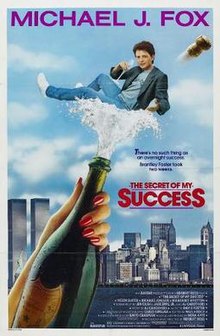
When Jim answers the phone he pretends to be his brother, this sort of plot happens in older comedy films such as ‘The Secret to my Success’ starring Michael Jay Fox (1987) where by pretending to be someone else something good happens to the main character. In our case a lot of money, most comedy films are based on uncommon things happening to normal people, which is exactly what we wanted to do, the social realism gives a basis on which the audience can also relate to.


The shot of the solicitor reading the adult magazine was influenced by the film ‘Superbad’ where the main character walks into a shop and starts reading one of the shelf and the camera zooms in. This shows the solicitor isn’t professional and that he is probably going to fall for Jim’s trick of pretending to be his brother.


2. How does your media product represent particular social groups?
 Jim is a white teenage male and is shown to be lazy and to like a drink, this plays on the stereotype that teenagers don’t do anything and men like to drink. Jim is also a male but contrastingly is seen to actually care about his future by attending college, this represents the male gender in too different ways, showing you how different the brothers are. The film would mainly attract young males and there are no female characters for females to relate to, but our target audience is of both genders aged 15-30 years old.
3. What kind of media institution might distribute your media product and why?
Our film wouldn't suit a major Hollywood production, promotion or distribution as it's not completely original or doesn't have a large enough target audience, I believe a really small production company should release it such as Warp Films as they have realised similar social realism comedies such as ‘Four Lions’ and ‘Le Donk and Scor Zay-Zee’. As for cinema releasing, I think this should be released early summer, as the film is set in early summer the nice weather has happy connotations and will suite the film. The film could also be released on rental sevices both in-shop and on TV/internet, if the demand was high enough. The opportunity for merchandising would be harder than that of a Hollywood family film, but t-shirts, posters and other memorabilia could be sold as there is a high interest in merchandise and memorabilia for comedy films as they remind people of the film and make them laugh.


4. Who would be the audience for your media product?

Our film would be watched by most comedy film fans, but specifically the target audience would be 15-30 year olds, mainly male. This is because all the characters are young males. However, the light hearted comedy and social realism/unrealism may attract a middle age audience. Films such as Step Brothers and Superbad appeal mainly to an audience of 15 and upwards due to the immature humour of the film. The age certificate would be 15 years old, this is because the plot line is unsuitable for anyone under 15, but not explicit enough to have a certificate of 18 years old. We chose to make our film as a 15 certificate and not 18, as making it an 18 would lose us 15-17 year olds and they’re mainly the ones that are going to relate to the characters.
5. How did you attract/address your audience?
We attracted a young male audience in several ways. Firstly, the cast for our film are all young male characters that the audience can relate to. Secondly, the younger brother Craig is a 17 year old student, adding a sense of realism to the film and showing the everyday life. Also the use of camera angles makes it easy for the viewer to feel drawn in at a personal level and understand the characters position so they could imagine themselves as Jim with all this money, making it more enjoyable to watch.

6. What have you learnt about technology from the process of constructing the product?
We learnt how to use the camera in terms of filming and playing back, how to white balance when in a new environment or lighting also how to set up the tripod. We found that when filming inside its most important to white balance the camera as the colours can look off, also natural lighting is best if as it gives the film a more realistic and warm feel as one problem we did encounter was that one of the shots we had filmed, the sun had gone in a little and it wasn’t as lit as before and the shot ruined the film so we had to re film it although we could have used final cut to adjust the colour we preferred to do it again to get the best result. Take spare batteries as the battery life on the camera we were using was quite short. However, it was easy to use and easy to take to wherever we needed to film. Not many problems were faced when filming and it was easy to overcome any problems we did encounter, such as lack on continuity between two shots. We used Final Cut Pro to edit our footage, and found it quite simple and easy to use. We were able to add sound and use effects to make the film flow. We faced a few problems with our titles, as we couldn’t figure out how to overlay titles onto the film without a background but overcame them with the use of a different effect. Our main problem was making the film fit 2 minutes as we had a lot less time than first planned, so we had to cut out a few shots, which was simple but I think it would have been better if we would have had longer.


7. Looking back at your preliminary task, what do you feel you have learnt in the progression from it to the full product?
We have learnt quite a lot from this task. First, we research the comedy genre and found out all the conventions of the genre, and incorporated them into our own film. This includes setting, mise en scene, plotlines, sound, camera work and loads more. For example, comedy films generally have a bright settings with happy 70’s music and tend to down at the main character as he is seen as an idiot. We noticed this and used high angle and eye level shot shots on Jim. We also used lots of creative shots such as the first shot zooming out of a poster a panning down to the main character shots and complex editing like match on action edits to add a professional side to the film. I have also learnt how to use the equipment confidently and wouldn't have to worry about being told how to next time. The same goes for the editing software, and can now use Final Cut Pro to put footage together and edit it, without the help of a tutor.

In my opinion, our project was a success as by the end we had produced what we wanted to, in the right style with the right type of shots and acting. Obviously improvements could have been made if we had have had more time and experience such as more back-up shots as some of the shots don't flow into each other as good as possible, but other than that I'm happy with what we've done.

Monday, 25 April 2011

Analysis of a Film - Dodgeball

I choose DodgeBall: A True Underdog Story (2004) for my research into comedy films.

The film opens showing the distributor, 20th Century Fox.

It then goes into a parody of a commercial, with a narrator asking questions if the "audience" is tired of being overweight, of being the same old "you". This is a parody of various exercise commercials which tries to grab the viewers attention by asking them questions. The music which plays in the background is simple melodic music which is usually heard in these type of commercials. Shown on the camera are various shots of buttocks (mainly female) , it then pans into White Goodman (Ben Stiller), the antagonist of the film.

He then takes over the commercial and begins to explain about Globo Gym and why people should go to his gym. He also says some absurd comparisons about how fat is a genetic disorder like baldness or necrophilia, which people would find funny at how random and off the wall they are. The camera meanwhile is following him around whilst he walks through the gym past various weightlifters or people doing other exercises.

White then speaks about how he was a client at the gym and it shows a picture of him, naked and obese staring at the camera whilst eating ice cream. It then zooms out showing the TV and then pans to the left showing a dog and finally stops panning when the sleeping main character, Peter LaFleur (Vince Vaughn) enters the shot.

He begins to murmur stuff about how "it feels good" when it cuts to the dog on his crotch, which he abruptly tells to get away. The shot then cuts to the TV, where White Goodman tells the viewer to "come on down and join the winning team" and that "we're better than you and we know it" with him giving a thumbs up, which gives the audience an idea of his absurd character.

Peter turns off the TV and gets up to the fridge. New "feel good" music kicks in at this point whilst it shows him getting a drink, brushing his teeth and getting into his car to drive to work, titles also start showing the names of the main actors and the crew and also the film name.


Recorded messages on his voicemail system tells us about how he's overdue on bills (by 8th months) or overdue on certain DVDs, Drunken Hussies 3, Backdoor Patrol 5 and Mona Lisa Smile. The former seem like Adult DVDs whilst Mona Lisa Smile is an actual film which seems like something a man by himself wouldn't watch.

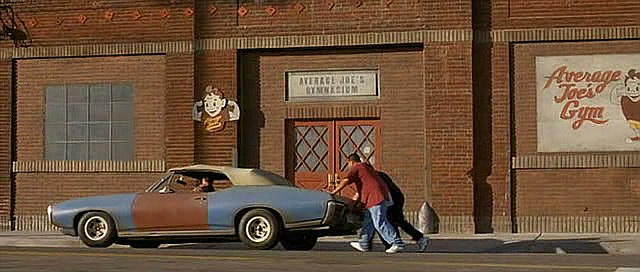
The location changes to Globo Gym, which then pans to the right and we see Peter's gym, Average Joe's which is the complete opposite to Globo Gym. Peter's car is being pushed by 3 people. It then cuts to inside the gym and the logo of Average Joe's, to make sure the audience didn't miss it the shot before.

Now, on this scene we can see that this also is a contrast to Globo Gym as Peter walks through the gym speaking to each of his customers as they're friends. In the commercial, we see White walking past people without speaking to them and how the people around him are only fixated on their looks not other problems they might have. The exercise equipment props are notably of lower quality compared to Globo Gyms equipment

Peter begins speaking to a skinny, dorky man about his problems about getting no messages from the voicemail dating he's been using. the camera cuts from Peter to the man during the conversation and Peter then moves on to the next person. This whole scene gives the audience information about the other cast and how their personalities are.

Peter and the next person, a small fat man wearing glasses who's exercising at the same time whilst they talk. The next person is sat on a machine and they speak about his current problem. The scene changes to the past where it shows the teenager at the cheerleading tryouts. It can be seen that he's obviously nervous by the way he speaks and how he tells the judges "good luck". His partner for the cheerleading tryouts is a fat teenage girl, who tells him that she's wearing no underwear and procedes to fall ontop of him after the lift. It goes back to Peter who tells the teenager that it'll all work out and he walks away.

Peter gets pushed against a wall by a man (Steve) as he's walking who talks like a pirate and acts like one as well. They speak about the fees for the gym and finally, Peter walks to his office.


As he enters the office, we see female legs and the camera cuts to show the woman turn around and greet Peter. She tells him she's a lawyer and they begin to converse about the gyms bills. The camera uses over the shoulder shots here to show the conversation and the reactions of Peter and the woman. Peter flirts every now and then with her during their conversation and finally asks her who would buy the gym anyway.

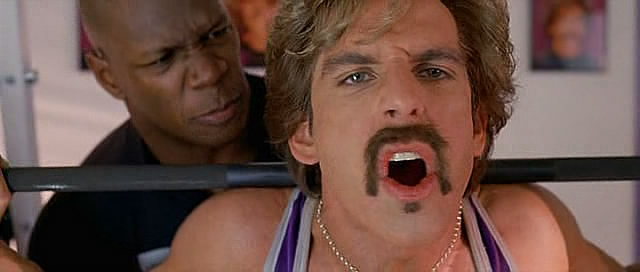
It then cuts to White Goodman with a man behind him telling him to squeeze it whilst White groans. The camera slowly zooms out and you can see White is only doing an exercise and the man is helping him. Peter comes in and White offers him some exotic food, which Peter declines. White tells him to walk with him and they exit the room with White closing the door on the Peter.

They speak to each other about the gym and what happens in the past whilst White insults Peter and his gym. He tells Peter he'll be making the gym into a parking space and goes into a tanning machine.

Monday, 11 April 2011

Analysis of a Film Opening (The Hangover)

The Hangover is a 2009 American comedy film directed by Todd Phillips. It stars Bradley Cooper , Ed Helms, Zach Galifianakis, Heather Graham, Justin Bartha and Jeffrey Tambor and was produced by Legendary Pictures on a budget of thirty-five million dollars. The plot follows four friends who travel to Las Vegas for a bachelor party, only to wake up the next morning not remembering a thing and missing the groom, whose wedding is scheduled to occur the next day.

The film starts with a medium shot of a woman lifting a bunch of flowers out of a van, the camera is focused on the flowers. There are titles on every shot at the start of the film. The text is in an italic font and has a romantic look to it. This shot then fades into the next shot which is a close up of a wedding cake, the camera is slowly zooming out and it eventually reveals the whole cake. The shot with the cake then fades into a shot of a wedding dress and then that fades into a shot of the venue of the wedding. Throughout the opening shots there is some non diegetic music running over it, the music is slow paced and has a romantic feel to it. On top of the music you can hear a number of voicemail answer machine messages, this gives the viewer the impression that something is wrong.


The next couple of shots are of the bride's mother and the bride herself. They both have panic on their face, this is emphasised as the camera shots are a medium close up and a close up.


The next shot is of the brides father who is trying to reassure his daughter that her husband to be would not be late on his wedding day. By this point, the music has just faded out.
The brides phone rings and the bride is very quick to answer, this also shows that she is panicing. The person on the other end of the phone is Phil. Phil plays a charcter who went on the groom's stag in Vegas and he is pretty unreliable in the eyes of the bride. It then cuts to a medium close up of Phil who is stood in the middle of the desert looking dirty and tired. He also has a cut on his lip which shows they have got into some trouble. In the background you can see three other charcters stood round a beaten up car.


Phil and the bride have a conversation in which Phil explains to her that they have lost Doug (the groom). He then tells her that the wedding is not going to happen, the camera then tilts up to the sky and the title of the film appears on the screen. At this point some non diegetic music starts to play. The main instrument used is an electric guitar. The song has a slow tempo, a man then starts to sing. His voice has a hint of soul. The opening credits then start to appear in white text on a background of different parts of Las Vegas. The backgrounds are videos that have been speeded up, this gives the audience the impression that time is passing. This links in with the storyline of the film as it shows that they're running out of time to find the missing groom.


When the opening credits have stopped playing you see a shot of the same house that you have previously seen the bride in. The camera slowly dollys through the gates and zooms in to the house. The next shot you see is of a family portrait, the camera then pans round to one of the main characters, Alan, who is getting a suit fitted. At this point the music stops as the dialogue is about to start. In the background you can see the groom's reflection through a mirror although the focus is on Alan. Alan then comes out with a comment about the suit tailor getting too close to his "shaft". This will make the audience laugh, it also lets the audience know that he is going to be a humourous character. At this point in the film some text comes on the bottom of the screen saying "two days earlier", the audience at this point realises that these events are happening before the trip to Vegas.

Throughout the first 15 minutes of the film the characters are dressed very smartly and their hair is very neat. The audience have already seen some of the characters at the start of the film when they have lost doug and they are all messed up, this makes the audience want to know what has happened to the characters to get them in this state. The audience think the same thing when they see the car that they're travelling in. The car is an old classic Mercedes and it is the father of the bride's car. The audience know that it is not going to come home in the same state. Below are too close ups of Phil, one before the trip to Vegas and one at the end of the trip to Vegas just to show the comparison.


The settings used in the first 15 minutes of The Hangover are location settings, this means there was a lot of natural light in the shots. The lighting is bright at the start at the film, this gives the film a very positive feel at the start.

At the start of the film the edit has a very slow feel to it which gives the audience the impression that everything is relaxed. The fades at the start of the film add to this. When they are in the car on the way to Vegas a hip hop song comes on and the cuts start to get a bit quicker, the shots fit in well with music. The song is non-diegetic. The song is about money which is appropriate as they are going to vegas. Thirteen minutes and forty-four seconds in to the film, the film quickens up as if it is being fast forwarded. The film does this to make the journey to Vegas seem shorter, it is what's known as eliptical editing.